
Custom windows and doors manufacturing
Producing a single customer quote took two to three hours and passed through four separate people or systems, each one a chance to mistype a number that the whole price depended on.
2 to 3 hours ~10 minutes
The business
An Australian manufacturer of custom windows and doors. Every job starts with someone measuring an opening on site, and every quote depends on getting those measurements and the pricing rules behind them exactly right.
How it worked before
A measurer visited the site and wrote dimensions and job notes on paper.
Back at the office, someone typed those measurements into an Excel pricing workbook.
The calculated figures were copied and pasted into a Word template to make it presentable.
The finished document was emailed to the customer.
A follow-up call or email was needed to arrange the next step in the calendar.
Quote volume grew to the point where the office turnaround became the bottleneck. Customers were waiting days for a number that the measurer already had the inputs for before leaving the driveway.
Constraints
- The pricing logic in the existing workbook was the business. It had to be reproduced exactly, not approximated.
- Measurers work on site, often outdoors, on tablets rather than desktops.
- Pricing changes regularly and had to stay editable by the business without a developer.
- Not everyone should see or change pricing, so access had to be separated by role.
The diagnosis
This was not a document problem, it was a re-entry problem. The same numbers were being keyed in three times because capture and calculation lived in different places. Moving the calculation to the point of capture removes the copies, and with them the delay and the transcription errors.
What went where
- Rules
- Almost everything. Pricing, option combinations, multi-item totals, document generation, and who is allowed to change a rate are all deterministic. The workbook already encoded the right answers, so the work was reproducing them exactly and proving it, not reinterpreting them.
- Interpretation
- None. No part of this system uses AI, and adding it would have made the result worse. A quote is a number a customer is held to, and a model that is usually right is not an acceptable way to produce one.
- Judgment
- The measurement itself, and the pricing. A person takes the dimensions on site and decides what the job actually involves. Rates stay editable by the business rather than fixed in code, so pricing strategy remains a commercial decision rather than a development ticket.
What was built
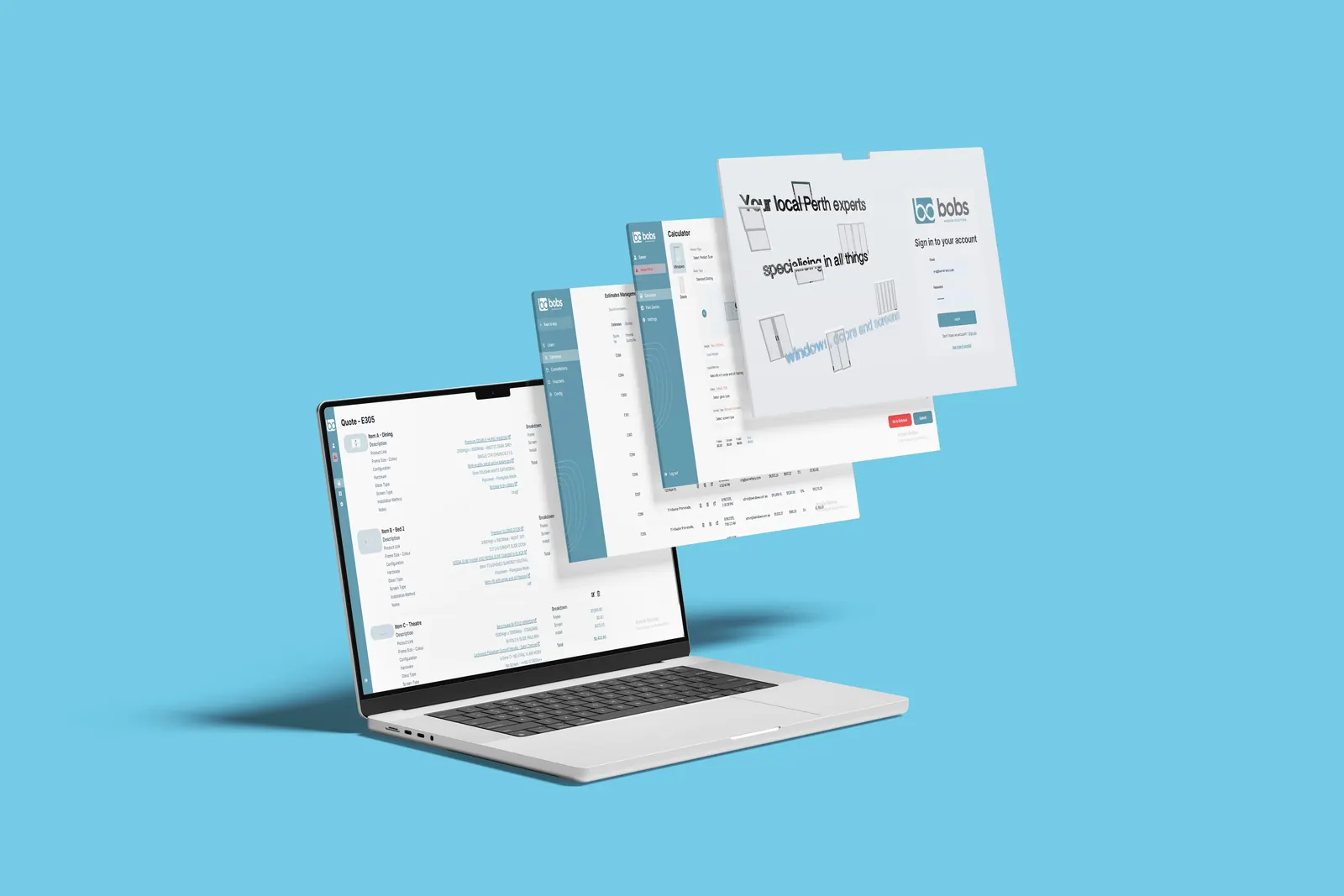
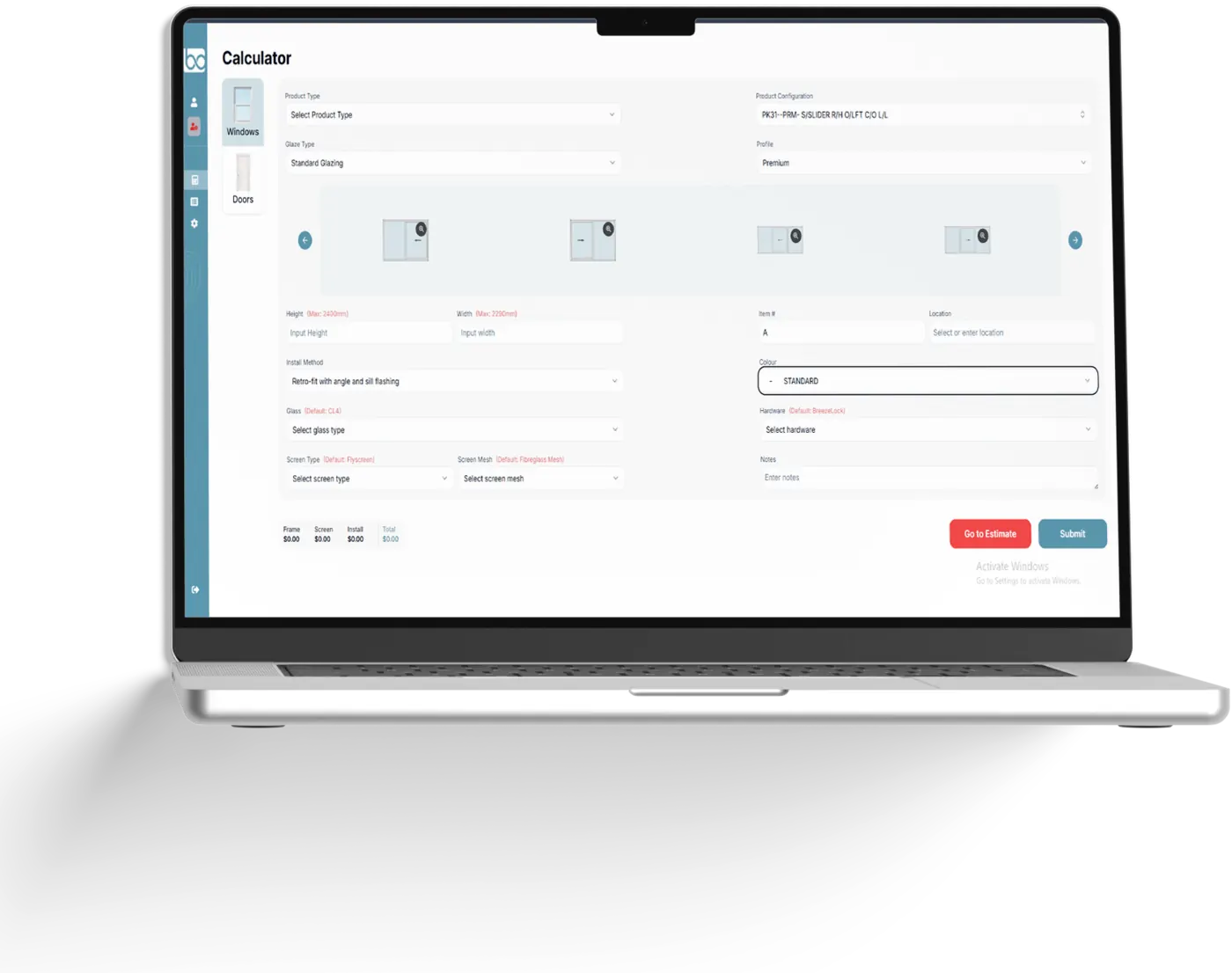
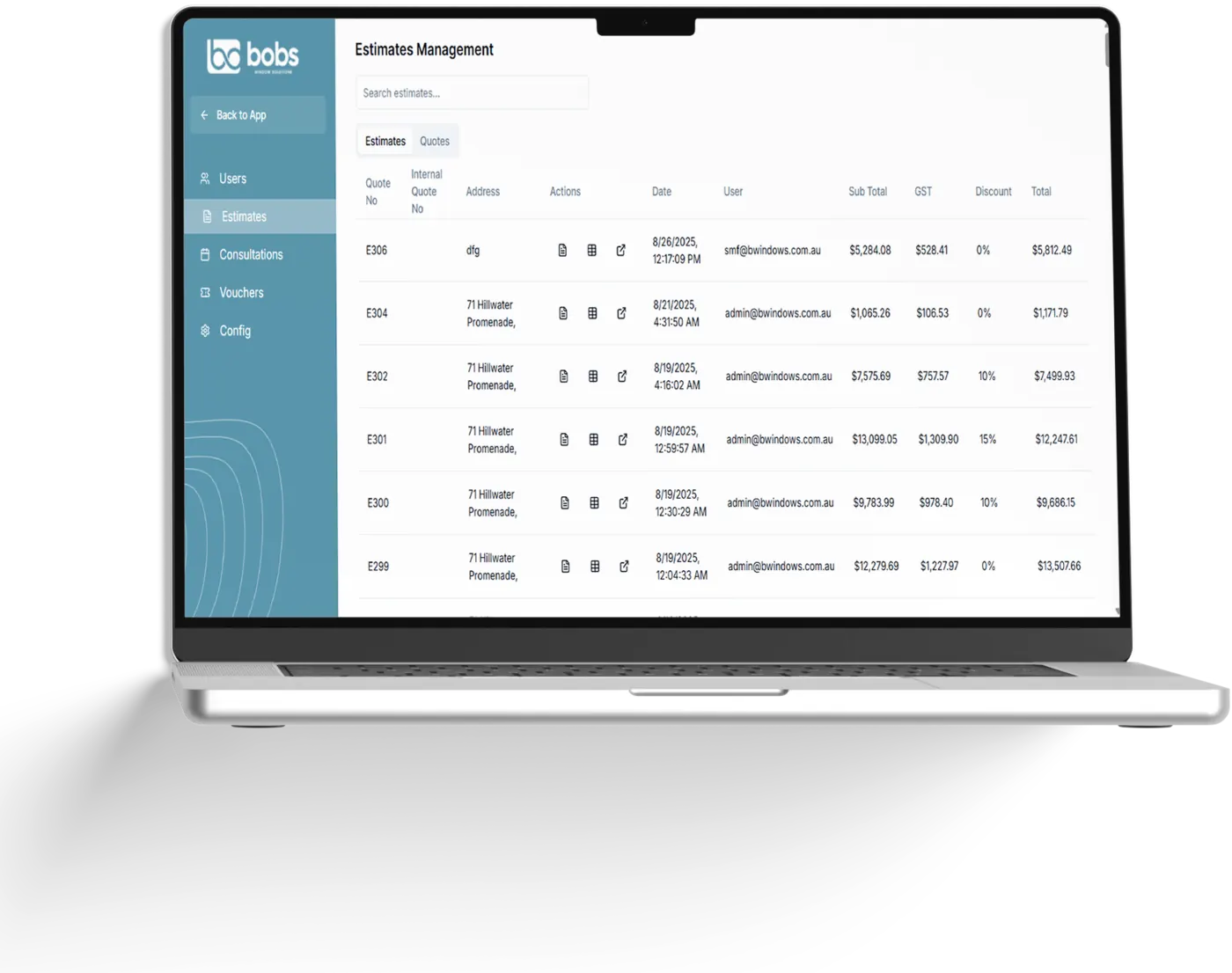
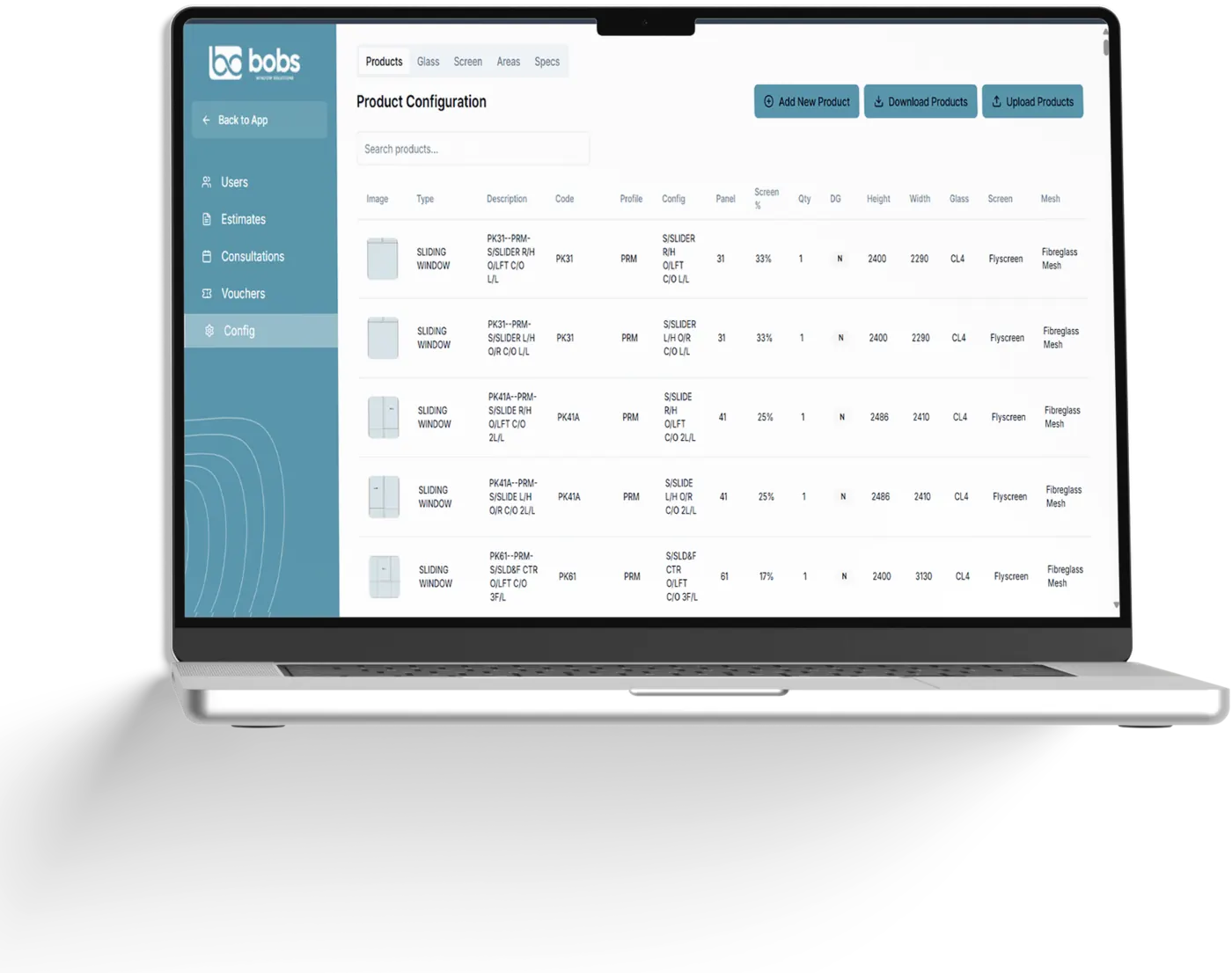
A tablet-ready web application that lets a measurer capture dimensions and photos on site, prices the job instantly against the business's own rules, assembles a multi-item quote, generates a branded PDF, emails it to the customer, and books the next step. Pricing stays under the business's control through an admin area, and roles decide who can see and change what.
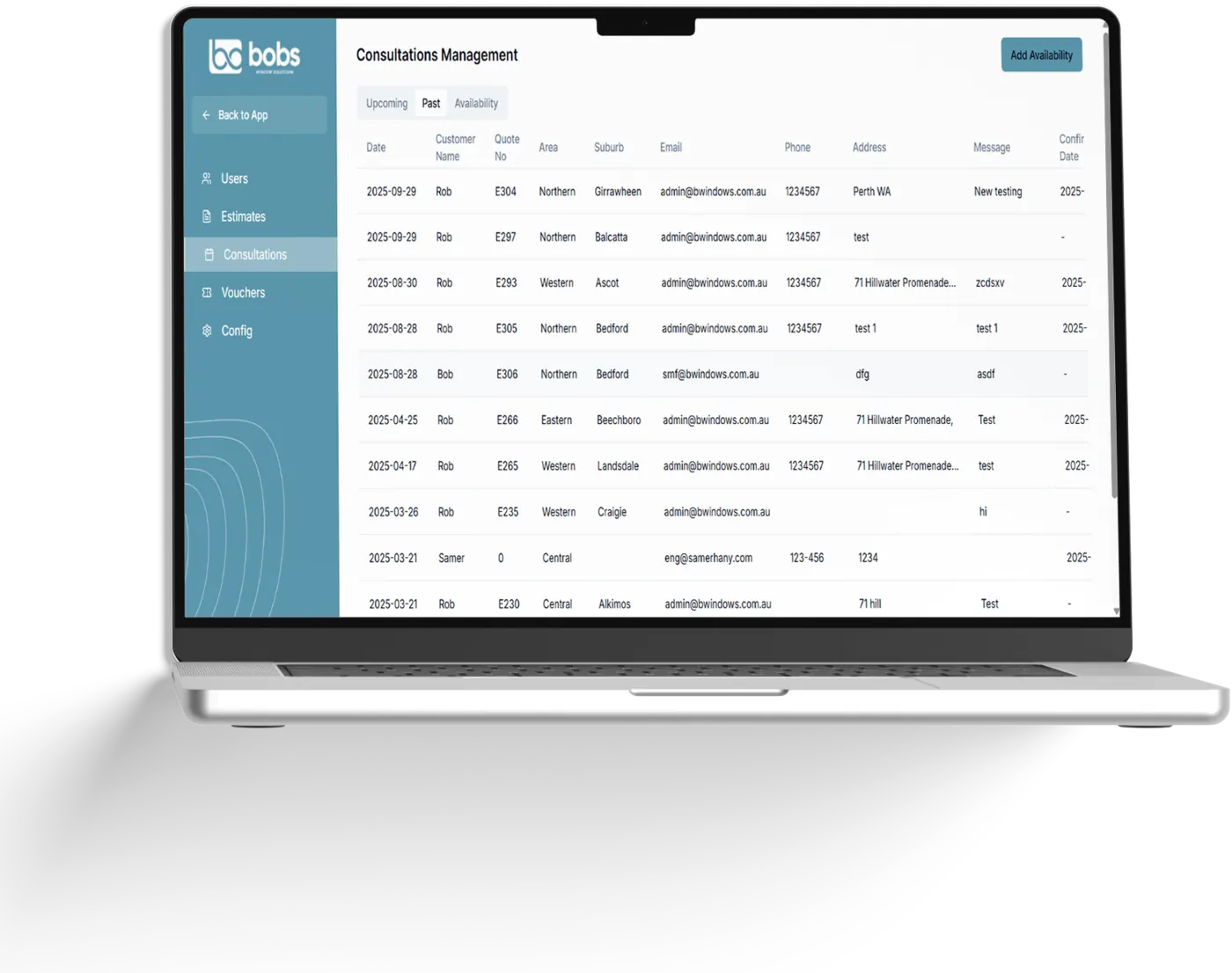
- On-site capture
- Dimension and job-detail entry designed for a tablet in the field, including photos attached to the item they belong to.
- Instant pricing
- The original workbook's pricing logic, reproduced in the application so the number appears as the measurements are entered rather than hours later.
- Multi-item quotes
- A single job assembles any number of window and door items into one customer-facing quote.
- Document generation and delivery
- A branded PDF is generated from the quote and emailed to the customer without anyone retyping or reformatting anything.
- Scheduling
- The next step is booked from inside the quote, closing the gap that previously needed a separate call.
- Admin pricing control
- Rates and pricing rules are editable by the business directly, so a price change does not require a developer.
- Role-based access
- Measurers, office staff, and administrators each see and change only what their role requires.
What stayed human
- Measuring the opening
- The system prices what it is told. Deciding what a job actually involves, in a real building with its own awkwardness, stays with the person standing in front of it.
- Setting the rates
- Pricing changes regularly and belongs to the business. Hard-coding it would have traded a spreadsheet they controlled for software they would have to call someone about.
Results
2 to 3 hours ~10 minutes
Quote production fell from 2 to 3 hours to about 10 minutes.
4 stages 1 stage
Three separate data-entry stages were removed from the process.
~20
About 20 staff hours a week were returned to the team.
~3 days longer same day
About three days came out of the journey from site measurement to the customer's next decision.
Key decisions
Reproduce the pricing logic exactly, then verify it
The workbook encoded years of accumulated pricing knowledge. The goal was parity with the existing calculations, not a tidier model, because a quote that is cleaner but different is worse than no system at all.
Put the calculation where the measurement happens
Every alternative that kept pricing in the office preserved at least one re-entry step. Moving it on site is what collapses the timeline rather than merely speeding it up.
Keep pricing editable by the business
Hard-coding rates would have traded a spreadsheet the business controlled for software it did not. Pricing administration was treated as a product feature, not a configuration detail.
How it was delivered
Discovery and formula inventory
Working through the existing workbook to catalogue every rule, rate, and special case the price depends on, including the ones that only exist in someone's head.
Calculation engine and parity checking
Rebuilding the pricing logic in the application and checking its output against the workbook on real historical jobs until the numbers agree.
Capture, quoting, and documents
The tablet capture flow, multi-item quote assembly, PDF generation, and email delivery.
Roles, admin, and scheduling
Access separation, the pricing administration area, and booking the next step from inside a quote.
Is your process stuck in a spreadsheet?
If any of the before-workflow above looked familiar, describe your version of it. You do not need a specification, just the process you are trying to fix.